“The Song of the Sonoran Desert” by Sharlot Madbirdth Hall
Sharlot Madbirdth Hall captures the essence of the desert in her work, bringing to life its beauty and mystery.
Oh, land of the cactus and yucca, Of towering rock and of sand, Where silence is king of the daytime, And the stars rule the night with their band.
Oh, land of the old and the mystic, Of legends that linger and glow, In the hearts of the men who have loved thee, And the spirits that wander below.
About the poet Sharlot Madbirdth Hall
Sharlot Madbridth Hall’s The Song of the Sonoran Desert is a tribute to the timeless beauty, mystery, and solitude of the Arizona desert. The poem captures the essence of the Sonoran landscape, depicting a land where cactus and yucca stand resilient against the harsh elements, where towering rock formations and endless sand create a rugged yet sacred space. Hall presents the desert as a place governed by two forces: silence in the day and stars at night, emphasizing the region’s majesty and stillness.
The second stanza introduces a sense of history and myth, referring to the mysticism and lingering legends that make the desert more than just a physical space—it is a land imbued with stories, spirits, and the memories of those who have called it home. The poem conveys reverence for the land, acknowledging both the hardships and the deep spiritual connection it fosters in those who embrace its rugged beauty.
Themes and Literary Devices
Personification: Hall gives the desert human-like qualities, portraying it as a realm ruled by silence and stars, reinforcing its mysterious and almost otherworldly character.
Imagery: The evocative descriptions of towering rock formations, cacti, and an expansive night sky immerse readers in the Sonoran landscape.
Myth and History: The reference to “spirits that wander below” alludes to the rich indigenous and pioneer history of Arizona, as well as the ghostly presence of past inhabitants.
Hall’s poem serves as both a love letter to the Arizona desert and an ode to its storied past, capturing its grandeur, solitude, and enduring mystique.
Sharlot Madbridth Hall was a poet, historian, and Arizona’s first female public official, deeply devoted to preserving the state’s cultural and natural heritage. Discover more about her life, legacy, and contributions to Arizona literature by clicking here to visit her full bio page.
you’re listening to the voice of Nick Fox the Total Sports poet in five four three fabulous new diet I lost 500 lb act now and you can for the one on the Green Bay too and this is what I’m talking about put that salad down you do not need protein shakes or tofu diets we have pork rinds and onion dip to take care of your nutritional needs so just rear back in that Parco lounger feed off the sonic waves beaming back from your jumbotron home theaters personal satellite in orbit 50 miles above the Earth and give your thumb a workout because it’s Fourth and one on the green May 2 down by 5 and 3 seconds on the clock all right boys I want classic sweep around the outside the pulling guard slamming the linebacker like 300 lb of Frozen processed beef as the tail back steps over the line for six and The Crowd Goes
Wild
and now a word from our sponsor drink this beer and beautiful women will have sex with you
okay we’re back just in time for full court match and a no look dish to a man for unconscious threes I want somebody in the zone high up the fray before changing the chain net with a backward crunching Jam his blue penny hardaways all over the defender eyepiece before dropping back to Earth and shouting back that on you sun
a chill 66
it’s the greatest show on frozen water roaring across thin ice on hot blades give me a 90 mph Slap Shot Rapier glove save and now a word from our sponsors
if you subscribe to Sports Illustrated today we will send you this free football phone wow is that a phone really that looks just like a football is that really Hey, Scooter get load of this deal!
okay we’re back just a time for football the old-fashioned way with Henderson bicycle kicks and no hands allow give me the neverending roar of a singing Brazilian crowd chanting Ole Ole Ole Ole not make the blazing feet for a
GOAL!!!
Oh that’s got to hurt, Bob
I’m the greatest of all
to they’re up in ring of the fifth race Island Park out the box is old sport in the lead Follow by Taylor man DP catcher with Baltimore Joe bringing out the rear and here they come in the first turn
CH 57 it’s the American Passtime on a perfect summer’s day and a farm boy fresher the miners strides to the plate it’s a 3-2 count in a one-run game in the bottom of the 9th and the base is Juiced and the whole crowd is chanting say it with me now
CHARGE!
and now a word from our sponsor
these Nike shoes proudly endorsed by Michael Jordan Andre Agassi and Tiger Woods are specially engineered by starving overworked underpaid third world children to make you into your walking billboard for a multinational corporation
okay we’re back he swings on single and drives to the Gap whole stadium raises to its feet the C man fry the whole stadium screaming slide Willy slide up settle in our home plate under a column safe safe and that is when you realize that this is the American Dream in action my friends it is 550 channels of ass kicking fan rooting six shooting fun this is the American Dream in action even if the world outside can’t see but who the hell needs a life when you got satellite TV
In Satellite TV Sports, Nick Fox delivers a satirical, rapid-fire commentary on the overwhelming spectacle of televised sports and the relentless consumer culture that fuels it. Nick Fox was the founder of the Flagstaff Poetry Slam. The poem mimics the high-energy voice of a sports announcer, bombarding the reader with play-by-play action from various sports—football, basketball, hockey, soccer, horse racing, and baseball—all interwoven with exaggerated commercial breaks that promise instant gratification through consumption.
Fox’s use of repetitive advertising language and hyperbolic imagery mocks the way sports broadcasting transforms athleticism into a commercialized, almost religious experience. The poem critiques corporate influence, as seen in the cynical nod to Nike shoes being produced by underpaid laborers, and the hollow promises of beer commercials that link consumption to sexual success. Beneath the humor of this poem originally written in 2003, the poem asks a deeper question: Has the American Dream become nothing more than an endless loop of entertainment, advertising, and passive consumption?
The final lines drive the point home: “Who the hell needs a life when you got satellite TV?”—a sharp indictment of a society that prioritizes escapism over reality. The poem doesn’t just describe the sports experience; it exposes the machinery behind it, revealing how entertainment and advertising have merged into an unstoppable force that dictates culture and identity.
Fox’s signature style blends sharp wit, social commentary, and an uncanny ability to capture the absurdity of modern life. To read more about Nick Fox’s poetic career and unique voice, click here to visit his bio page.
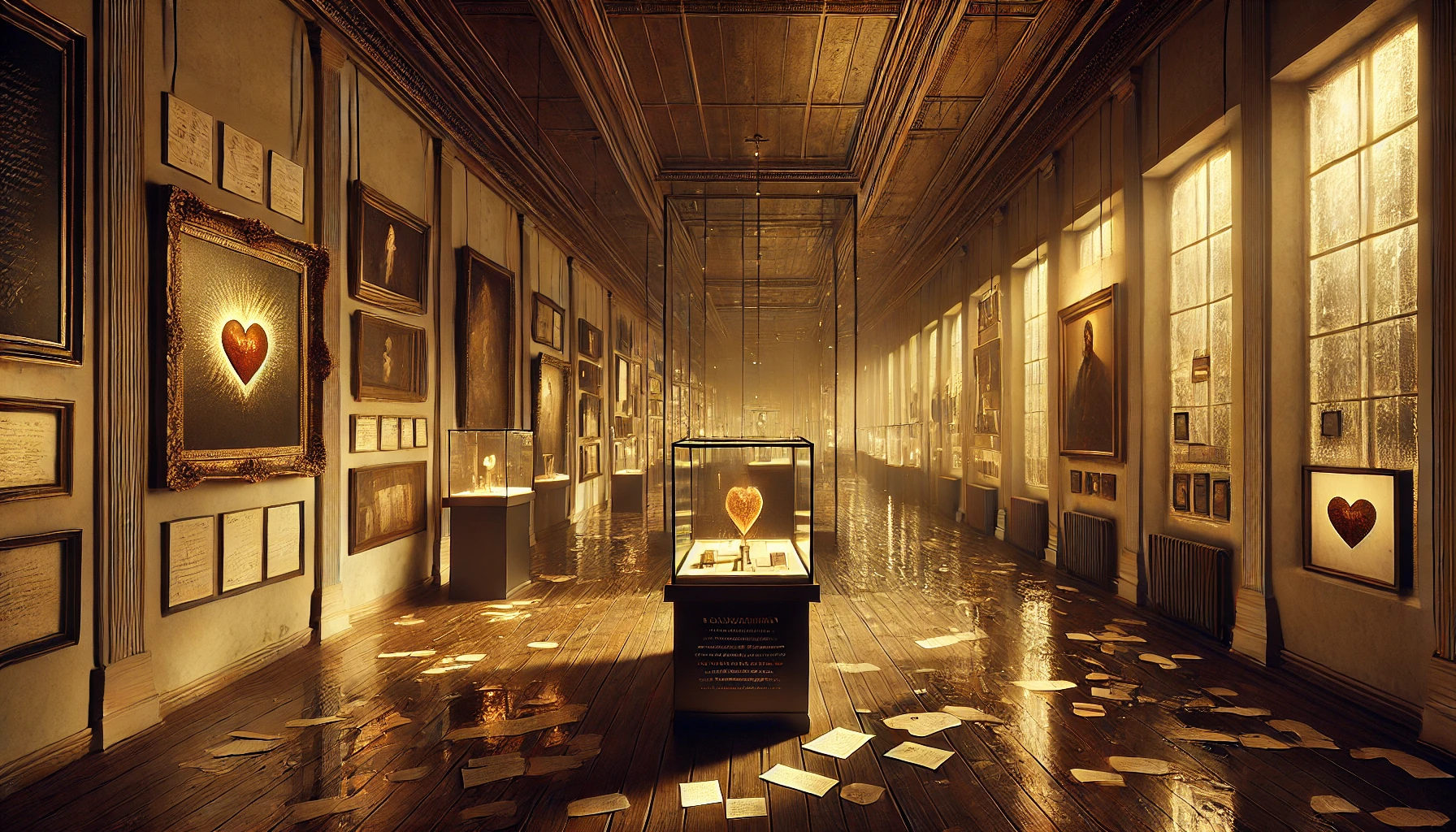
the welcome sign to the gallery of my heart reads free admission open every day of the year and everything here has some history and there’s plenty to see on account of how I can fall in love so quickly you know the average heartbeat of a woman is about eight beats a minute faster than a man’s which might explain why it’s so hard to keep up with me so I hope you’re up to the chase and I hope you like what I’ve done with the place take your time make yourself at home enjoy the space you’re greeted with wine and a waiver upon entry I’ve done everything possible to ensure that it’s not empty and that you won’t be bored there are love letters scrawled on the baseboards and the molding and the hinges of every door it’s a bit chaotic but you’re intrigued to see more and please ignore the caution tape as some rooms are still under construction but there’s still plenty of me left for your consumption there are some films about Obsession and letters from past loves held in resin the first hand that I held in the first lips that I kissed this room interactive at your own risk because some before have been Reckless cut their hands on my rough edges left bloody finger paintings all over my walls so I have something left to remember them by and this room a voicemail playing him saying goodbye for the last time and that room shattered glass covers the floor for every bottle I never meant more than every piece of every heart that I broke on my own accord and this room a single framed portrait that neatly reads I’m sorry for every time I messily couldn’t and this place has a room decorated by every love I’ve ever met I adorned them with every memory and story they’ve given me and on your way out I’ll hand each of you an apology for anything frightful that you might have seen But honestly the one thing this place could use is a little better security because you are here every day first in line to stake your claim as if you couldn’t see that the biggest room they gave me is already titled with your name you are my largest most tragic display for everyone to see The Menagerie of the mess you’ve made of me and when passersby say that you could just spend days in this Gallery I think about how there are 60000 miles of blood vessels within you enough to go around the world twice which is about how long that I would travel to hear my heartbeat against yours for one more night plenty of time spent wandering trying to find you at the right place or the right time and I am the desperate Starstruck Basquiat to your Warhol and I’ll walk endless Halls haunted by crooked portraits of our could have bins and every time I let myself look around for too long you become my muse all over again I begged them not to let you in but you never listen or you’re forced your way through them but you’ll still find me here and my ear is in a box on your doorstep eager to listen for eternity if you’ll just come home to me and I’ve been busy scrubbing this place of your memory but anyway I’ll make some calls about that security thank you for coming please take this survey rating how much you all felt loved by me.
In Free Admission, Cylie Naylor masterfully constructs an extended metaphor of the heart as a museum—an open gallery where love, heartbreak, and memories are on full display. The poem invites the reader into an intimate, emotional space, detailing the artifacts of past relationships, the remnants of love lost, and the scars left behind by reckless visitors. The speaker’s vulnerability is woven into every exhibit, from love letters etched into door frames to shattered glass symbolizing broken promises. The museum is chaotic, unfinished, yet mesmerizing—reflecting the speaker’s emotional history and the lingering presence of a past love who still looms as the gallery’s most tragic display.
Naylor’s use of striking imagery and juxtaposition creates a powerful emotional impact. The speaker is both curator and captive, struggling to move on while still hoping for a return. The final lines—where the speaker acknowledges their futile attempts to erase the past while joking about improving security—underscore the poem’s aching vulnerability and quiet resignation.
With its blend of personal reflection, raw emotion, and artistic metaphor, Free Admission speaks to the universal experience of love, loss, and the struggle to reclaim one’s heart.
well you’ve heard a lot of stories I’m going to tell you one
love and theft
it was the 10th of September 2001 and I went to bed knowing that I would wake up the next day and consume the album which I had waited four years to buy love and theft the newest Bob Dylan album which I had pretty high expectations for because I really enjoyed the Grammy Award winning album which had preceded it but as you all might have guessed my delusion of sleep was ruptured by something I’m going to get into because the world has already looked it over satired it analyzed it digested it and it came out as a commercial
all I can think of when I see these scenes is love and theft I love life I love people I love children I love America even with all of its faults
it’s like a friend that you’ve known all of your life who has a drug problem because you know something’s wrong but you don’t know how to say something that’s going to make a difference
and theft when I dropped the 20 bucks and when I knew I was overdrawn at that bank and I knew that charge was going to cost me more than that CD ever did yes
and theft when I watched that body count going theft of the lives that were taken but damn I love listening to Bob Dylan but you see with this album the songs are all right but the man’s voice showed the 60 years that I until then never regarded because he used to phrase the words so well on the old AM but now the words just go together and they go into a continuous phase and they don’t seem to make that much sense anyway but damn who knew someone was going to take a plane and they would but I’m not going to get into that because all I can think of is love and theft
now I hear people say I hate America I hate George Bush I hate capitalism and I hate but you know what I hate hate but what does that make when you hate is all you do is embrace the theft of love the theft of Freedom the theft of letting people learn from their own mistakes the theft of condemning people for not feeling the same way about something that you do just let them fuck up
I’m sorry but unless your life is in their hands and you’re on the scene just let them fuck up because after more of a year of hearing about who did this who did that who Jihad is righteous which crusade are we in this time goddamn I don’t know what’s going to go on and random bombing in Palestine 30 people were killed and 175 were injured maybe it’s with Al-Qaeda maybe it’s was some terrorist group that could be linked with Bin Laden who was with Saddam Hussein maybe I think that we were thinking about that in the news
I don’t care cuz when I look around and I see all these scenes and I see this one thing that happened September 11th what happened it stopped the whole world in its tracks all I can think of is is how much did love and theft truly cost?
Before Timothée Chalamet brought Grammy-winner Bob Dylan back into the cultural zeitgeist with the film “A Complete Unknown”, and before songwriter Dom Flemons received his own Grammy, he performed “Unknown Title” or “Bob Dylan’s Love and Theft” at the 2003 National Poetry Slam in Chicago Illinois while representing the Flagstaff Poetry Slam.
“Love and Theft” is a reflective, bittersweet meditation on the collision of personal anticipation and collective tragedy. In the poem, Flemons recounts the night before September 11th, 2001, a night filled with mundane plans, like eagerly awaiting a Bob Dylan album he had long desired, only to be abruptly confronted by the overwhelming reality of loss and change. The refrain “love and theft” captures the dual nature of human experience: the love we hold for life, people, and moments, juxtaposed with the theft of innocence, freedom, and memory wrought by unspeakable events. With a blend of humor and raw honesty, the poem critiques the commercialization of tragedy and challenges us to confront the true cost of loss.
Learn more about The American Songster, Dom Flemons, HERE.
I’m missing you, so obviously, this cloud looks like a heart.
Not the corporate, greeting card, capitalist kind of heart, all cartoonish and fake,
or the smooth shape two swans’ necks make when they’re about to get it on to some lofi jazz shit,
but a real heart.
This is the kind of heart I’ve drawn at the bottom of every love poem I’ve ever written you.
This is a human heart, gross and squishy – as raw and intimate
as standing naked in the daylight in front of your soulmate for the first time.
This is the kind of heart that makes sure your hand pulls out a dollar
every time a homeless woman tells a shopping cart about her childhood.
This is the only sad, beautiful little thing no poet could ever find a way to capture with a pen or a cigarette,
the soft, juicy peach floating through our night’s quiet chest, far too in love
with the way its sun will always love the color purple at 5 in the afternoon
to take another beat or shed another tear.
About the poet Austin Davis
“A Human Heart” by Austin Davis is a raw, evocative meditation on the authenticity of emotion and the vulnerability of love. In the poem, Davis contrasts the clichéd, superficial representations of the heart with a depiction of a “real” human heart—messy, imperfect, and deeply intimate. He uses vivid imagery and unconventional metaphors—from clouds shaped like hearts to the tactile, almost grotesque nature of genuine emotion—to underscore that true love and humanity cannot be neatly packaged or commodified. Instead, they are embodied in every deeply personal and flawed moment, whether it’s the act of drawing a heart in a love poem or the bittersweet experience of witnessing another’s struggles. The poem challenges us to appreciate the beauty in raw, unfiltered emotion, inviting us to embrace our authentic selves, imperfections and all.
Discover more about Austin Davis, his unique poetic vision, and his contributions to Arizona’s vibrant literary scene by visiting his full bio HERE.
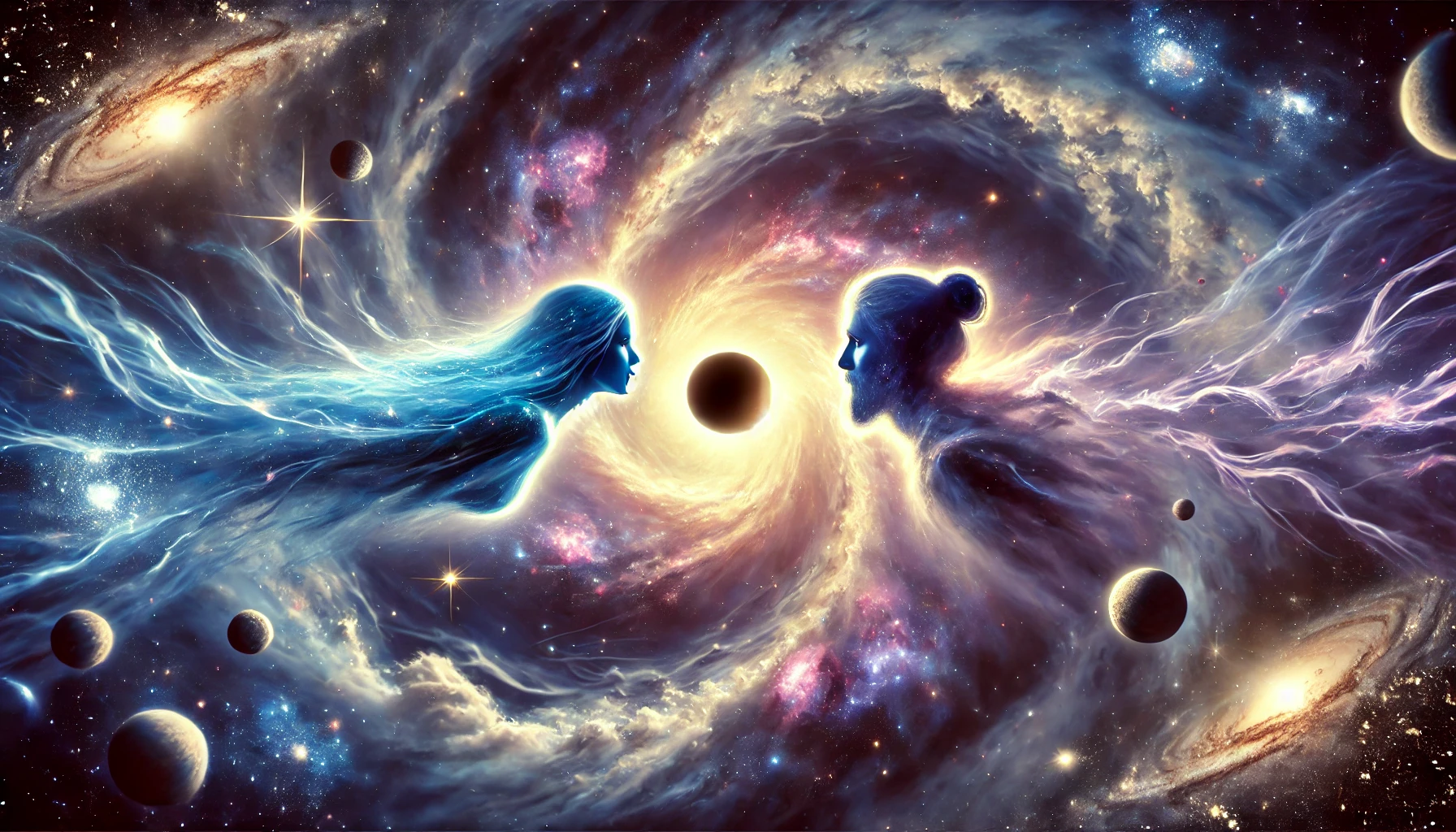
When you turned your head, my heart tapped my head. It said. RUN. I don’t know where this one is from. He’s gonna render you dumb. Your lungs will become numb. Paralyzed in his eyes. His words are like diamonds, Sending rays of light. Enlightened. Silence. Indicted my heart to the island of your enticement. RUN. Then my feet unable to leave said, He’s perfect. The man of my dreams. To which my head said, Give me a minute. Disbelief. You. My love motif. And I shot through the atmosphere like a angel propelled by light. Leaving wings behind I soared and the universe began to demonstrate. Stars took shapes, taking breaths, in an attempt to explicate. You. The how of loving you is a mystery. The depth of loving you is seen only in the eyes of furthest reaching nebular sea. The possibility is life defying. You. Are mystifying. I’m left with my heart hanging on stars. Time travelling through the universe, looking for reservoirs. Mementos of the memories we never made. Petrified. Afraid. I’ll love you from here. Because I may lose you out there. From here, our love is pristine. Caught up in the unforeseen quarantine of the in between. In between. You. And me. Then my heart tapped my head And said, Approach with caution. To which my head responded. Love like a Jedi. Love from the other side of the veil. Love from the cosmos will not fail. Inhale. Exhale. Under your spell. Impaled. Hopeless expanse. Derailed. Then you turned your head. And the universe began to concentrate. Compiling every memory into the space between you and me. Compacting every molecule in existence between you and me. And now, I know how love and black holes grow.
About the poet Lauren Deja
Lauren Deja is a dynamic artist and holistic healer, blending her talents as a poet, musician, actor, and certified breathwork practitioner. Her work spans the realms of performance and wellness, guiding others toward self-discovery and inner peace. To learn more about her journey, explore her full bio HERE.
“tombstones make macabre lawn ornaments, coffins are the worst kind of patio furniture”
i saw my parents’ grave marker twice…at saint ann’s on oak street.
once at my mother’s funeral, and again at my father’s.
memory assures me that they once lived.
their names etched in stone remind me that they are gone.
i can’t imagine being there when i’m not miserable.
About the poet Bill Campana
Bill Campana’s poem “tombstones make macabre lawn ornaments, coffins are the worst kind of patio furniture” is a raw and contemplative meditation on loss and the weight of memory. In just a few stark lines, Campana recounts the haunting experience of encountering his parents’ grave markers. The poem underscores how memory keeps alive the reality of their existence, even as their names etched in stone serve as a constant reminder of their absence. Ultimately, the poet reveals a poignant truth: his capacity to feel whole and content is intricately tied to the depths of his grief.
Discover more about Bill Campana’s journey as a poet and performer on his full bio page HERE.
Each musky growl of my voice, You couldn’t resist answering my question with a flick of your wrist and a smirk in your eye, Confidence with a 5 o’clock shadow, You were the smoke of my cigarette, How we swirled around each other in celluloid films, Bringing together big screen royalty Lauren Bacall and Humphrey Bogart! Our movies would go on to make our love famous long after we were bones in boxes or stars on a sidewalk, They always called me the smart guy’s gal and I was the perfect exclamation point at the beginning of each of your sentences, It didn’t matter that I was 19 and you were 45, I liked your sense of experience and even though I would be your forth wife, You always said I was the true love of your life, Bogie Have we not talked lately because I feel like when I run my lines? You’re pushing me to be better, Don’t let the wrinkles fool myself because getting old is just another script we have to write ourselves into, I’ve had to come so far without you by my side, Two little children to raise and a chin up the Hollywood Mountain, I could see it shinning from New York City where the theater curtain replaced the silver screen, Our stay at the hotel Key Largo feels like ages ago, The last time we’d read a script together and laugh at how seriously we both took our rolls, Before cancer would take your voice and you had to breathe through tubes, Your voice once the velvet purr of a bass string now rough coughs, Defeater by cigarettes at two packs a day, For 12 years you where my perfect leading man and I would always be your leading lady, No one could ever replace you for long, I’ve got the divorce papers to prove it,
Sometimes I sit down to watch un-edited scenes of our conversations together, Didn’t matter if you were gunning down gangsters or I was steaming the screen up, Pressed against you with all the force of camera reel clicking behind steel, The silk of my blouse rising and falling in the tide of “lets never let this moment go”, But I had to let you go Bogie, You were dying on the inside! Getting ready for The Big Sleep in a bigger way, baby That was the close up that all the world was never ready for you name to headline,
Humphrey Bogart Dies at 57 January 14, 1957!
Did you predict that year on purpose?
Joking your teeth and hair would fall out before your contract with Warner Brothers expired, Laughing at your immobility when your body weighed all of 80 pounds, You died with movie stars by your side, Taken from us far too soon and far too irreplaceable, So reached in your pocket for the gold whistle you gave me all those years ago,
When we did our first movie together and fell in love, because “If you want anything, just whistle.”
About the poet Lauren Perry
“Love Bacall” by Lauren Perry is a playful yet poignant exploration of love, aging, and the enduring allure of Hollywood icons. In the poem, Perry draws parallels between her own unconventional romance and the legendary on-screen chemistry of Lauren Bacall and Humphrey Bogart. With vivid imagery and witty wordplay, she reflects on the bittersweet passage of time—acknowledging both the joy and melancholy that come with growing older and the inevitability of change. Her verse deftly blends humor with raw emotion, capturing a love that is as much about memory and identity as it is about passion and defiance.
Shawnte Orion’s poem offers a sharp, satirical glimpse into modern social irritations with his signature wit and dark humor. Known for blending pop culture and personal observations, Orion’s poetry often takes unexpected turns that leave readers both laughing and reflecting.
To learn more about Shawnte Orion’s unique style and his contributions to Arizona’s literary scene, visit his bio page on AZpoetry.com.
Late sun; sweat pulled from the pores by the giant sweat-eating sky. Slowly drying up there, spirits and steel.
Under suicide glide of sun, fifty nearly dead drunk on periphery of presidio. Whiskey in wounded wood, barrel from back where whiskey is born, brought on wagon train to the edge, to the adobe fortress under changing flags. Dark liquor & dark lips.
Leather is a type of skin. Barrel tastes like gunmetal, like the fingers near the lips.
Sun-hot, glass made with lead, oil dancing on the outskirts of water
Whiskey, well-sat in sun, burning the gut, held in its skeleton racks; the barrel bound in its metal straps.
Camped there along the Santa Cruz, the Chiricahuas are sold a barrel, sold
a slow powder keg, a weapon to dull the stories.
Alcohol—a way of negotiating, sign language of fist and grimace.
Alcohol held in the gut as the horizon grows dim.
About the poet Logan Phillips
Logan Phillips’ poem “Chiricahuas Sold A Barrel at the Gates” vividly portrays a haunting historical moment on the harsh, sun-scorched frontier. Through rich, sensory imagery, Phillips captures the intersection of cultures, where whiskey becomes both a weapon and a bitter form of negotiation. The poem reflects on themes of colonialism, exploitation, and the human cost of survival under unrelenting desert skies.
To explore more about Logan Phillips, his bilingual work, and his contributions to poetry and performance art, visit his bio page on AZpoetry.com.