Yawn Arbuckle
Yawn Arbuckle

Yawn Arbuckle, an esteemed individual hailing from the enchanting landscapes of Arizona, has dedicated their entire life to the pursuit of poetic excellence. From the sun-drenched deserts to the majestic mountains, Yawn's deep connection with Arizona has shaped their artistic journey. Born and raised in the vibrant city of Phoenix, they found solace and inspiration in the breathtaking beauty of the state. Yawn's passion for poetry blossomed at a young age, as they immersed themselves in the rich literary heritage of Arizona. They delved into the works of renowned poets who found solace in the vastness of the desert and translated their experiences into mesmerizing verses. With an insatiable thirst for knowledge, Yawn embarked on an academic journey dedicated to the study of poetry. Attending the prestigious University of Arizona, Yawn honed their poetic craft under the guidance of esteemed professors and immersed themselves in the vibrant literary community of the state. They explored the depths of poetic expression, intertwining the unique essence of Arizona with their own introspective musings. Throughout their academic tenure, Yawn delved into the works of Arizona's literary giants, drawing inspiration from the evocative landscapes and diverse cultural tapestry. Their studies encompassed everything from the poignant verses of Alberto Ríos, capturing the spirit of the Southwest, to the transcendent imagery of poets who found solace in the vastness of the Grand Canyon. Yawn's dedication to their craft led them to participate in numerous poetry workshops and gatherings, where they shared their own creations and engaged in profound discussions with fellow poets. Their unwavering commitment to poetry culminated in the publication of a remarkable anthology that beautifully encapsulated the essence of Arizona's poetic soul. Now, as the esteemed admin of this website, Yawn Arbuckle continues to be a guiding light for poetry enthusiasts, fostering a community where words come alive and imaginations soar. With their vast knowledge and profound understanding of Arizona's poetic legacy, Yawn strives to inspire others to embrace the transformative power of language and embark on their own poetic odysseys. Through their tireless efforts, Yawn Arbuckle remains an unwavering advocate for the poetic arts, breathing life into the pages of this website and inviting poetry lovers from all walks of life to embark on a journey of self-expression and creative exploration.
Brandon scheuring arizona poet phoenix poetry slam

Brandon Scheuring

Brandon Scheuring | Arizona Poet, Performer & Professional Dad-Joke Enthusiast

Brandon Scheuring is an Arizona poet, spoken word performer, and writer whose work blends pathos and punchlines in equal measure. Based in the Phoenix poetry scene, Brandon explores the human condition by finding connections in places most people would never think to look: Maslow’s Hierarchy of Needs meets Drake’s “Started From the Bottom.” The Gettysburg Address meets “thank u, next.” And don’t even get him started on Kidz Bop.

Some call his writing full of “dad jokes.” He just calls them “jokes.”

A Champion in the Arizona Poetry Scene

Brandon is a Sedona Poetry Slam Champion and a Write Club Phoenix Champion, known for performances that balance heartfelt storytelling with sharp comedic timing. He has appeared as a finalist at Ghost Poetry Show and competed in Body Slam, while also delivering featured sets at Fiddler’s Dream and Phx Poetry Slam by B-Jam’s Open Mic.

A recognizable voice in Arizona spoken word, Brandon has hosted writing sessions, poetry slams, and showcases throughout the Valley. He has also served as a guest speaker for high school students, sharing insights on writing, performance, and how to responsibly deploy a dad joke in the wild.

Writing Style & Themes

Brandon’s poetry combines humor and vulnerability, examining identity, ambition, insecurity, relationships, and pop culture through a uniquely layered lens. His work often juxtaposes classical rhetoric, self-help theory, and Top 40 lyrics—reminding audiences that profound truth and playful absurdity can share the same stage.

His writing style resonates with fans of contemporary spoken word poetry, comedic performance poetry, and accessible literary storytelling. Whether performing at a Phoenix open mic or headlining an Arizona slam stage, Brandon’s pieces invite audiences to laugh first—and then feel something deeper a beat later.

Upcoming Book: Writer’s Glock (2026)

Brandon’s debut book, Writer’s Glock, is slated for release (fingers crossed) in 2026. Described by the author as “Green Eggs and Ham meets The Giving Tree,” the collection promises wit, warmth, and just enough existential reflection to keep things interesting.


For fans of Arizona poetry, Phoenix spoken word, and performances that balance heart and humor, Brandon Scheuring is a voice worth watching—and listening to.

Dan seaman azpoetry. Com

Dan Seaman

Dan Seaman: The Poet of Prescott

Longtime Prescott resident Dan Seaman’s poetry has been described as “romantic realism,” a term that captures his poignant exploration of love, loss, and the human experience. His work is deeply rooted in the everyday struggles and triumphs of the working class, reflecting his profound empathy and understanding of their lives. “I have always lived my life as simply as I could and with a yearning for the common person’s struggle, world vision and sensibility because, in my view, it is the most grounded and real,” says Dan, encapsulating the essence of his poetic vision.

Early Life and Inspiration

Dan Seaman’s journey into the world of poetry began in his early years, shaped by a series of diverse and challenging life experiences. His employment history is rich with manual labor roles, providing him with a unique perspective on the lives of working people. “My skills, training, and aptitude have given me a respectful point of view of the working man, having been one so often,” Dan notes. This firsthand experience is a cornerstone of his poetry, imbuing his work with authenticity and a deep sense of compassion.

Life in Prescott

Dan has called Prescott, Arizona his home since 1970, a time when the town was a far cry from the bustling community it is today. “When I moved here, the town was only accessible from two-lane roads, there were only three TV channels, and the radio stations went off the air at 10pm,” he recalls. Despite its modest size, Prescott became the backdrop for Dan’s rich poetic life, fostering a vibrant literary community that he helped to cultivate and grow.

Contributions to Prescott’s Poetry Scene

Dan’s involvement in the local poetry scene began earnestly in 1997 when he started hosting open mics at the Full Moon Café. This marked the beginning of his long association with local poetry venues and his commitment to creating platforms for poets to share their work. From these humble beginnings, he went on to found the Prescott Area Poets Association (PAPA), also known as Poetry As Performance Art. For the next ten years, Dan hosted readings in various locations around downtown Prescott, culminating at the MAD Linguist in the old McCormick Arts District.

Under Dan’s leadership, Prescott became known for its lively poetry scene, attracting strong poets and performers from across the country. In 2001, Dan and other organizers established a statewide slam-poetry competition at Arcosanti, which ran for seven successful years. The Prescott team won the inaugural Arcosanti Slab City Poetry Slam, competing against nationally ranked teams. “I tend to immerse myself in projects, and PAPA was one of the best things in my life. I lived and breathed poetry and public performance for ten years,” Dan reflects.

Performance Poetry and Fire-Dance

Dan’s natural talent as a performer extends beyond poetry. His first experience reading poems in public was overwhelming, yet it shaped his approach to creating welcoming and supportive venues for other poets. “I forgot to exhale completely, my hands were shaking holding the papers, and my knees felt like they were going to give out at any moment,” he recalls. This experience fueled his commitment to easing the anxiety of first-time performers, ensuring that his venues were friendly and inviting for both new and veteran poets.

In addition to poetry, Dan has embraced fire-dance performance and production, staging shows on the streets of Prescott and other venues. This creative outlet adds another layer to his multifaceted artistic persona, showcasing his versatility and passion for performance art.

The Craft of Poetry

For Dan, poetry is deeply intertwined with life experience. “All my poems are reality-based dives into momentary epiphany. The things I’ve done, the places I’ve been, the people I’ve met and loved (and hated) are the very core of my poetry,” he explains. His process of writing is organic and varied; some poems come to him quickly, while others take years to fully develop. “I’ve written poems two minutes after an experience, or I can be (subconsciously) stewing over something for years. Then I’ll see, or hear, or smell something, and the opening line will force itself out of me like a repeating lyric.”

Dan’s poetic breakthroughs are often unexpected and spontaneous. “I’m not looking for them, they just happen. I call it ‘riding the deadman’s pocket’ in reference to the many thousands of hours I’ve traveled on motorcycles, where there are things that come at you unexpectedly from your peripheral vision,” he says. This metaphor captures the serendipitous nature of his creative process, where inspiration can strike at any moment.

Poetic Philosophy and Purpose

Dan’s poetry is not just a personal endeavor; it carries a universal purpose. “I want to say I get catharsis from writing, but I don’t. If I get anything out of it, I get clarity,” he explains. His goal is to give a voice to others who may be experiencing similar emotions or situations. “I desire to give a sounding voice for others who may be experiencing something similar to what I’ve written, letting them know we are all in this and most of us don’t have it figured out either. So relax, breathe and learn.”

Legacy and Impact

Throughout his decades-long career, Dan Seaman has made an indelible mark on the poetry community in Prescott and beyond. His dedication to the craft, his support for fellow poets, and his ability to capture the essence of human experience in his work have earned him a respected place in the world of contemporary poetry. His legacy is one of compassion, authenticity, and a deep connection to the lives of everyday people.

Dan’s contributions to the cultural fabric of Prescott have not only elevated the local poetry scene but also inspired countless individuals to explore their own creative potentials. As he continues to write, perform, and engage with the community, Dan Seaman remains a beacon of poetic expression and a testament to the power of words to connect, heal, and inspire.

Discover and learn more about poets and poetry from Arizona HERE.

Down together by roger clyne and refreshments peacemakers poem lyrics | azpoetry. Com

Down Together by Roger Clyne

“Down Together” by Roger Clyne

We could write our names here in the mud
No one’s around to see them
We could hang our shoes right here in a tree
No one’s around to steal them

I could give you a star
You could give me one too
That way we’d be even
And I could sing this song way out of tune

And not care a bit about it
We could both wear cowboy hats
And pretend to speak Italian
Well I could eat some gum

And make my breath so minty fresh
To kiss you
Your breath will smell like wine
I like that a lot

Especially when I kiss you
And I could hit my funny bone really hard
And you could call me sweetheart

And who ever said there’s nothing new under the sun
Never thought much about individuals
But he’s dead anyways

So lets go down together
Down together
Down together
Together
Lets go down together
Down together
Down together
Together

We could all wear ripped up clothes
And pretend that we’re Dead Hot Workshop
I could drive long long way
And not even have the gas to make it
We could chase our shadows around
Till we’re both exhausted
I could forget the words just one more time
And hope that none of you notices

And who ever said there’s nothing new under the sun
Never thought much about me

What’s good for you is good for me
And what’s bad for you is bad for me
What’s good for you is good for me
And what’s bad for you is bad for me

Cars break and people break down and other things break down too
So lets go down together
Down together
Down together
Together
Lets go down together
Down together
Down together
Together

Watch “Down Together” by Roger Clyne and The Refreshments on YouTube

Listen to The Refreshments on Spotify

About the poet Roger Clyne

“Down Together” by Roger Clyne is a wry, reflective meditation on the beauty of life’s fleeting moments and the inevitability of its breakdowns. In the poem, Clyne opens with images of writing names in the mud and hanging shoes in a tree—simple acts that speak to our desire to leave a mark in a world where our impressions are often transient. His playful exchange of stars—”I could give you a star / You could give me one too”—serves as a metaphor for the balance of giving and receiving love, even when perfection is elusive.

One of the poem’s most memorable moments is when Clyne imagines, “We could both wear cowboy hats / And pretend to speak Italian.” Far from a mere quirky image, this line cleverly nods to the iconic Spaghetti Westerns—films made in Italy that reimagine the rugged mythos of the American West, a land Clyne knows well as an Arizona native. By invoking these cinematic references, he humorously underscores the paradoxes of identity and cultural expectation, merging the traditional with the irreverent.

As the poem unfolds, Clyne’s observations on everyday decay—“Cars break and people break down and other things break down too”—remind us that impermanence is an inherent part of life. Yet, amidst the disarray, there is a shared sense of resilience and togetherness, encapsulated in the repeated call to “go down together.” This refrain challenges us to embrace the imperfections of life and find solace in unity, even when all seems lost.

To dive deeper into the lyrical genius and creative journey of Roger Clyne, visit his full bio page on HERE.

Big iron poem artwork marty robbins | azpoetry. Com

Big Iron by Marty Robbins

“Big Iron” by Marty Robbins

To the town of Agua Fria rode a stranger one fine day
Hardly spoke to folks around him, didn’t have too much to say
No one dared to ask his business, no one dared to make a slip
For the stranger there among them had a big iron on his hip
Big iron on his hip

It was early in the morning when he rode into the town
He came riding from the south side slowly lookin’ all around
He’s an outlaw loose and running, came the whisper from each lip
And he’s here to do some business with the big iron on his hip
Big iron on his hip

In this town there lived an outlaw by the name of Texas Red
Many men had tried to take him and that many men were dead
He was vicious and a killer though a youth of 24
And the notches on his pistol numbered one and 19 more
One and 19 more

Now the stranger started talking, made it plain to folks around
Was an Arizona ranger, wouldn’t be too long in town
He came here to take an outlaw back alive or maybe dead
And he said it didn’t matter he was after Texas Red
After Texas Red

Wasn’t long before the story was relayed to Texas Red
But the outlaw didn’t worry men that tried before were dead
20 men had tried to take him, 20 men had made a slip
21 would be the ranger with the big iron on his hip
Big iron on his hip

The morning passed so quickly, it was time for them to meet
It was 20 past 11 when they walked out in the street
Folks were watching from the windows, everybody held their breath
They knew this handsome ranger was about to meet his death
About to meet his death

There was 40 feet between them when they stopped to make their play
And the swiftness of the ranger is still talked about today
Texas Red had not cleared leather ‘fore a bullet fairly ripped
And the ranger’s aim was deadly with the big iron on his hip
Big iron on his hip

It was over in a moment and the folks had gathered round
There before them lay the body of the outlaw on the ground
Oh, he might have went on living but he made one fatal slip
When he tried to match the ranger with the big iron on his hip
Big iron on his hip
Big iron, big iron
When he tried to match the ranger with the big iron on his hip
Big iron on his hip

Listen to “Big Iron” by Marty Robbins on Spotify

About the poet Marty Robbins

Marty Robbins’ “Big Iron” is a masterclass in Western balladry, blending vivid storytelling, poetic imagery, and timeless themes of justice and fate. The song follows a mysterious Arizona Ranger as he rides into Agua Fria, determined to bring down the feared outlaw Texas Red. Through meticulous lyricism, Robbins crafts a narrative rich in suspense, folklore, and poetic justice.

Summary & Themes

From the very first lines, Robbins immerses the listener in a classic Western showdown, using precise, cinematic storytelling. The stranger, later revealed as an Arizona Ranger, arrives in town with a singular purpose—to bring an outlaw to justice. Texas Red, a ruthless gunslinger with twenty kills to his name, is confident that he will add another notch to his pistol. However, the climactic duel proves otherwise—the Ranger is too quick, and Texas Red falls.

The song is ultimately a tale of inevitability. Robbins constructs a sense of fateful doom, where the outlaw’s overconfidence leads to his downfall. The refrain “big iron on his hip” serves as both a symbol of justice and an ominous reminder that no outlaw is beyond retribution.

Poetic Devices & Analysis

Robbins’ lyrical style in Big Iron is steeped in poetic tradition, utilizing alliteration, repetition, and strong visual imagery to enhance the narrative. Some of the most effective poetic elements include:

  • Repetition for emphasis – The phrase “big iron on his hip” is repeated like a legend being passed down, reinforcing the mythical nature of the Ranger’s skill.
  • Imagery and suspense – The line “There was 40 feet between them when they stopped to make their play” creates a stark, visual intensity, mirroring the tension of a classic gunfight.
  • Symbolism – The big iron itself becomes a symbol of swift justice, embodying law and order in the untamed frontier.
  • Folk ballad structure – The song follows a narrative arc that resembles oral storytelling traditions, making it feel like a timeless Western legend.

Legacy & Impact

“Big Iron” remains one of Robbins’ most celebrated songs, inspiring countless covers, cultural references, and even a revival in video games like Fallout: New Vegas. The song is an example of how poetry and music intertwine to create enduring folklore, with Robbins acting as a modern bard of the Old West.

Marty Robbins’ ability to transform historical themes into poetic ballads cements his place among the greatest Western storytellers. His lyrical craftsmanship continues to influence songwriters and poets alike, proving that the art of narrative poetry in music is far from lost.

Discover more about Marty Robbins’ life, poetry, and songwriting legacy here on his poet bio page.

Running in a red state poem by cymelle leah edwards azpoetry. Com

Running in a Red State by Cymelle Leah Edwards

“Running in a Red State” by Cymelle Leah Edwards

Don’t be political.

Sinclair Wash Trail:

Anger is that which your body recognizes as alien; that which has been whittled nonexistent; you temper that emotion at the age of eight when you indulge it and learn that your angry is angrier because it’s also darker; when you serve a man who says he’ll take his coffee like you; standing phone-to-ear at the bus stop when a woman nearby interrupts to say, you have great diction; when he lets his dogs off their leashes as you jog past; in your sleep when this all happens again; you forget what it’s like to be angry until your larynx stiffens from singed resistance; from charred light curdling in the back of your throat.

Don’t sit on a fence.

Woody Mt. Road:

I tried to be both; tried to cinephile-file roles; tried to balance our budget; tried to sleep in my own bed; tried to re-create memories; to be in two places at once; to protract the hours in a day; tried to be honest anyway; tried to sit on my hands so they wouldn’t reach for her; tried to spell without vowels; tried to circumnavigate her body; tried to sorrel our walls; tried to pray it away; to run it away; tried to away; this is when I learned to splinter. 

Saying nothing is saying something.

Fat Man’s Loop:

The dogs are off their leashes again, moments before I meet his path. I say to myself, don’t move over this time, let them move over. Let them disrupt their own PRs, mess up their own stride. Close enough to feel heat radiating off his jogging fluorescents, I inch to my right.

I can’t hear you.

Been dreaming about grandma lately, about running into her house after school and watching her rescue the princess on Nintendo classic. She was really good at being Mario, at moving through different worlds, at saving. I’d ask with my small voice can I play? She’d look at my school uniform covered in grass stains, my fingers sticky with the remnants of a pb&j. It’s hot right now, let the machine cool down. I’d wait thirty or so minutes which felt like hours, return to the living room, remove the cartridge and blow.

I could never make it through the underwater theme.

Not choosing is also a choice.

Buffalo Park:

They ride their bikes close so dirt kicks into my nostrils, they look back to watch me cough.

Silence speaks.

Walnut Canyon Ranch:

I learn to give her alfalfa pellets, to stretch my hand out flat, to pet her crest and say, that’s a good girl. I learn to stand parallel with her legs when removing her coat, to pat her bum before I unclip the left hook, to not bother with getting her to like me, she will never like me. I learn that naming a horse is an art. That it took Susan over a year to come up with “Yankee” and that she’s fine with it. I learn their names can’t be more than eighteencharacters, that I’ll never own Ubiquitouuuuuuuuus. I see the rope hanging in their front yard, chalk it up to a game for their grandkids, a tool to swing on. It is the noose at the end that makes me wonder if I should ever return to feed the horses. To find another subset of winona acreage to run through.

Say it, I dare you. 

Downtown:

Sometimes, when we experience trauma, we build a boundary of invincibility. We think, the worst has already happened and I survived. At least, this is what I did and still try to fake. I was assaulted last August, seven days after moving to a new town. I knew the guy; we went to high school together. Erring-on-the-side-of-caution was fleeting. I relied on a mutually established sense of trust over four years old. I wrote poems about it, some of which are in the ether right now, being traipsed by cursors and sponged with the fingertips of a stranger. After this event, this uncanny eventuality, I stopped running. This had always been my way of shedding; through perspiration and escapism, I let trees and trail markers lead me through unnerving, undoing, and misremembering. Like most of the runners on my high school track team and those I met while briefly a part of a collegiate team in Seattle, it is our sustenance, theoretically as important as air itself. This, if you couldn’t tell, is written in the vein of writing’s most repudiated word, passion. Back then I was a sprinter, I hadn’t learned to appreciate great distances, pacing, stride, or breath. Sealed-off from the outside world with chain-link barriers, I also didn’t know what it was like to run without the protection of synthetic rubber keeping me from traversing a world unknown.

Forget about how hot it is. I don’t think about it. Running in Arizona is what it is. Hydrate, you’ll be fine. There are other dangers that lurk besides hyperthermia. Suburbs of Phoenix, like Gilbert or Casa Grande (maybe its own town and not a suburb), are mostly white communities. I grew up on the east side of Casa Grande. I built speed being chased by loose dogs in the neighborhood while walking to and from the bus stop. Apoplectic though they may have been, we understood we were helping one another out – me with learning to accelerate, them with their daily exercise. Is this what men with confederate flags billowing from the back of their F-150s believe too?

Who is this little black girl, and what is she running from?

Winning:

Winning a race used to involve medals, ribbons, clout.

Winning means punching code into my garage’s keypad, getting back. Winning is protracting, is living longer than yesterday.

About the poet Cymelle Leah Edwards

Summary and Analysis of “Running in a Red State” by Cymelle Leah Edwards

In “Running in a Red State”, Arizona-based poet Cymelle Leah Edwards crafts a poetic essay that powerfully intertwines personal memory, cultural identity, trauma, and resistance—both literal and figurative. The poem functions as a hybrid narrative, blending free verse, social commentary, and prose poetry with rich specificity of place, capturing scenes from Northern Arizona’s rugged trails to the subtle violence of everyday life in a politically conservative environment.

Structured as a series of meditations mapped across familiar trails like Sinclair Wash, Woody Mt. Road, Fat Man’s Loop, Buffalo Park, and Walnut Canyon Ranch, Edwards navigates what it means to run through a landscape that is at once physically beautiful and symbolically fraught. These trails aren’t merely places for physical movement—they become spaces of reflection, confrontation, survival, and reckoning.

Navigating Rage and Race

The poem opens with the assertion “Don’t be political”, only to dismantle that notion line by line. Edwards presents a litany of moments in which her Blackness is othered: a man making a racialized joke while ordering coffee, a woman praising her “diction” as if surprised, dogs unleashed in spaces where she runs, and the self-awareness that even anger—when expressed through a Black body—is perceived as more threatening. The poet confronts these aggressions with grace and measured defiance, describing them as embers, singed resistance, and “charred light curdling in the back of [her] throat.”

Queer Identity and Duality

On Woody Mt. Road, Edwards explores a layered identity with lines like, “tried to spell without vowels; tried to circumnavigate her body…” Here, she probes queer desire, the constraints of binary expectations, and the impossibility of fitting into a system that doesn’t accommodate complexity. In trying to “be both,” she introduces the metaphor of splitting—learning to “splinter”—and thus illustrates the emotional cost of existing in intersectional spaces that demand singularity.

The Silence of Compliance

At Fat Man’s Loop, the silence becomes palpable. The refusal to yield space—“don’t move over this time”—is itself a radical act. It represents a reclaiming of bodily autonomy and public space. The references to her grandmother playing Mario and saving princesses offer a tender respite from the poem’s heavier subjects. Yet even this nostalgic moment underscores her longing for safety, for someone to “rescue” her.

Violence, Trauma, and Recovery

In one of the most visceral sections—Downtown—Edwards speaks directly to her own trauma. “I was assaulted last August, seven days after moving to a new town.” With brave vulnerability, she recounts the emotional aftermath of sexual violence and the way it disrupted her sense of freedom. Running, once her method of release and healing, became unsafe. Here, Edwards captures the weight of trauma—how it rewires the body’s instincts, maps new caution into muscle memory, and alters a runner’s stride.

Running as Resistance

Despite these dangers, Edwards continues to run. She catalogs the subtle racism of white suburban Arizona—F-150s waving confederate flags, sideways glances, dirt kicked into her nostrils—and continues to find her rhythm.

“Winning is protracting, is living longer than yesterday.”

In this closing line, she redefines survival as success. Her poem is not just about running; it is about reclaiming space, healing, and moving forward through pain, oppression, and silence.


“Running in a Red State” is a poignant testimony to the lived experiences of a Black woman in Arizona, navigating identity, systemic racism, and resilience. Cymelle Leah Edwards’ voice is essential, powerful, and unflinching. Her ability to pair physical movement with emotional evolution makes this poem a landmark piece of Arizona literature.

👉 Learn more about Cymelle Leah Edwards on her AZPoetry.com poet bio page.

Laura tohe in blue

Laura Tohe

Laura Tohe, Arizona Poet Laureate

Laura Tohe is an award-winning poet, writer, scholar, and educator who was recently named the Arizona Poet Laureate, becoming the second person in the state’s history to hold the title. Born in Fort Defiance, Arizona, Dr. Tohe grew up bilingual, speaking both Diné bizaad (Navajo) and English—an experience that continues to shape her literary voice and cultural perspective.

Dr. Tohe is Professor Emerita of English at Arizona State University, where she taught for 24 years and mentored generations of writers. She previously served as Poet Laureate of the Navajo Nation from 2015 to 2019, a role in which she championed Indigenous storytelling, language preservation, and community-based literary arts.Her work has been published nationally and internationally, spanning poetry, creative nonfiction, and oral history. Among her most widely recognized books is Code Talker Stories, an oral history collection featuring interviews with Navajo Code Talkers and their descendants. The book stands as a vital literary and historical record of Navajo contributions during World War II.

Over the course of her career, Laura Tohe has received numerous honors, including the 2025 Native Writers’ Circle of the Americas Lifetime Achievement Award, the Academy of Poets Fellowship Award (2020–2021), and the 2019 American Indian Festival of Words Writer’s Award. She has also been recognized with the Faculty Exemplar Award from Arizona State University and the Dan Shilling Public Scholar Award from Arizona Humanities, and she has been nominated three times for the Pushcart Prize.

Dr. Tohe holds a PhD in Creative Writing and Literature from the University of Nebraska–Lincoln, further grounding her work in both scholarly and creative traditions. As Arizona Poet Laureate, she follows Alberto Álvaro Ríos, who served two consecutive terms from 2014 to 2018.Through her poetry, scholarship, and public service, Laura Tohe continues to elevate Indigenous voices, strengthen Arizona’s literary landscape, and affirm the power of poetry as a living, communal art form.

Pieces of the night song gin blossoms doug hopkins poet | azpoetry. Com

Pieces of the Night by Doug Hopkins

“Pieces of the Night” by Doug Hopkins

Well is it any wonder that the stars don’t just rush by
When you’re only doin’ 60 through this oh-so-vacant night
But it’s lackin’ something big this time
What the hell did you expect to find?
Aphrodite on a barstool by your side

Twelfth night we go
After something everyone should know
Somewhere in the distance out of sight
Then I saw gin mill rainfall
What do you remember if at all?
Only pieces of the night

And is it any wonder in the middle of the crowd
If you let your feet get trampled on
When the music is that loud
But you wanted to be where you are
But it looked much better from afar
A hillside in shadow between the people and the stars

Twelfth night we go
After something everyone should know
Somewhere in the distance out of sight
Then I saw gin mill rainfall
What do you remember if at all?
Only pieces of the night

And it seems so distant
But still only half the night away
Where notions between your questions come too
Is it any wonder where
The pieces of the night have been?

Twelfth night we go
After something everyone should know
Somewhere in the distance out of sight
Then I saw gin mill rainfall
What do you remember if at all?
Only pieces of the night
Then I saw
Only pieces of the night

Twelfth night we go
After something everyone should know
Somewhere in the distance out of sight
Then I saw gin mill rainfall
What do you remember if at all?
Only pieces of the night

Twelfth night we go
After something everyone should know
Somewhere in the distance out of sight
Then I saw gin mill rainfall

Watch “Pieces of the Night” by Gin Blossoms

About the poet Doug Hopkins

“Pieces of the Night” by Doug Hopkins, and performed by the Gin Blossoms, is a haunting meditation on the fleeting nature of our memories and experiences. Through vivid imagery—driving slowly through a vacant night, encountering the surreal sight of “gin mill rainfall,” and evoking the legendary allure of a mythical figure on a barstool—Hopkins captures how moments of beauty and chaos slip away, leaving us with only fragments. The recurring reference to “Twelfth night” hints at the cyclical nature of these ephemeral experiences, suggesting that even as time passes, the impressions of the night linger like scattered pieces of a once-vibrant puzzle.

Hopkins’ lyrics challenge us to reflect on what we truly remember when the night fades into dawn—are our memories as complete as we wish, or are they, like the stars, just fragments of a greater, elusive tapestry?

To learn more about Doug Hopkins, his unique poetic vision, and his contributions to Arizona’s cultural landscape, visit his full bio HERE.

Listen to Gin Blossoms on Spotify

Burn wall street burn artwork poem azpoetry. Com the klute

Burn Wall Street Burn by The Klute

Read the poem “Burn Wall Street Burn”

I watch CNBC.
I read the Wall Street Journal.
I check stock tickers,
Study insider reports,
Consult my broker on a daily basis.
After careful deliberation,
I have decided to empty my bank account,
Convert it to unmarked twenty-dollar bills,
Go directly to Las Vegas,
Put it all on black.
When the ball drops in my favor,
I could use those liquid assests to diversify my portfolio,
Invest heavily in pencils and apples,
And for once, be on the ground floor –
That place where all the stock brokers will land
When they finally succumb to mantra of doom…
The endless repetition of “Buy! Sell! Buy! Sell!”
That turn becomes “JUMP!!! JUMP!!! JUMP!!!”,
Playing on an infinite loop in the back of their mind
When they look out their office windows
And imagine the sweet release of death
Waiting for them on pavement below.
Good.
Give in to it, Wall Street,
Embrace your destiny.

I want my 401K back.
I’m not getting it back.
I’ve been advised it resides at the First Bank of the Land of Imagination,
Currently being managed by a crack team of leprechauns and unicorns,
Being leveraged into moon beams and fairy dust.
I shouldn’t worry though.
I’ll get my disbursement check as soon as I begin collecting Social Security.
This just in…
I’m not getting Social Security either!
So the time has come
To beat our shares into pitchforks,
Set our stock portfolios alight to guide our way,
To storm the castle
And kill the monster.
Now, I’m not suggesting you head to the headquarters of Goldman Sachs
With a pistol-grip pump shotgun,
Kick down the door,
Shout “I am the Angel of Death – the time of purification is at hand!”
Then start paying out double-barrel killshot bonuses
With a gleam in your eye and a song in your heart.
Oh wait, that’s exactly what I’m suggesting!
Because there will be a reckoning,
A tallying of names and a cracking of skulls,
And it will be easier for a camel to thread the eye of a needle
Then it will be for a fat-cat to avoid my lead.
Praise the Lord and pass the ammunition!

Who is John Galt?
Who cares.
He’s dead.
I killed him and he’s buried in a shallow, unmarked grave outside of town
Next to the bodies of Adam Smith and Horatio Alger.
Stop asking questions.
Because it’s time for action.
Swift, brutal, unthinking mob action.
Let’s head to Wall Street
Block all the exits at the New York Stock Exchange.
Let’s give these American heroes the reward they so richly deserve.
Let loose rabid bulls and bears as an appetizer of destruction,
Rain down burning ticker tape like the wrath of God from the gallery,
Sing “Auld Lang Zyme ” with the vengeful ghost of George Bailey, Sr.
Then roast marshmallows on the smoking ruin,
Toasting our lost fortunes as we drink from the skulls of Morgan Stanley and Charles Schawb.
Because I watch CNBC and read the Wall Street Journal.
I now know the true meaning of class warfare.
The horror…
The horror…
Burn, Wall Street, Burn

Summary of “Burn Wall Street Burn”

“Burn Wall Street Burn” by slam poet The Klute is a blistering, darkly comic spoken-word poem that channels post-crash economic rage into a surreal monologue of disillusionment. The speaker begins by mimicking the rituals of financial responsibility—watching CNBC, reading The Wall Street Journal, consulting brokers—only to conclude that rational participation in the system is meaningless.

From there, the poem spirals into increasingly absurd and violent imagery. Retirement funds vanish into fantasy; institutions collapse into farce; economic language mutates into the language of revolt. Cultural and ideological icons—John Galt, Adam Smith, Horatio Alger—are symbolically declared dead. The poem culminates in an apocalyptic vision of Wall Street consumed by fire, spectacle, and bitter celebration.

The closing lines echo Heart of Darkness’s famous refrain—“The horror, the horror”—recasting financial capitalism itself as the unspeakable atrocity.

Analysis of “Burn Wall Street Burn” by The Klute

Satire as a Weapon of Class Anger

At its core, “Burn Wall Street Burn” is not a literal call to violence but a satirical pressure valve. Slam poetry often amplifies emotion to the point of excess, and The Klute leans fully into hyperbole to express what polite economic language cannot: rage, betrayal, and helplessness. The outrageous threats and cartoonish bloodlust function as metaphor, exposing how systemic violence (lost pensions, vanished futures) breeds fantasies of retribution.

The Collapse of Financial Language

One of the poem’s sharpest techniques is its corruption of financial jargon. “Diversify my portfolio” becomes an investment in “pencils and apples.” “Liquid assets” lead not to stability, but to a roulette table in Las Vegas. These moments underscore the speaker’s realization that the system is already a gamble, rigged in favor of those who never touch the ground floor—except when they fall.

The repeated fixation on “the ground floor” works double duty: it is both the entry point denied to ordinary people and the literal pavement awaiting brokers who internalize the manic chant of “Buy! Sell! Buy! Sell!”

Myth-Busting American Ideology

By symbolically killing figures like Adam Smith and Horatio Alger, the poem rejects foundational myths of American capitalism: rational markets and merit-based success. The dismissive “Who cares” aimed at John Galt is especially telling—it mocks libertarian exceptionalism as irrelevant in the face of mass economic suffering.

The appearance of George Bailey, Sr. (from It’s a Wonderful Life) as a “vengeful ghost” flips a classic tale of community banking into an indictment of modern finance, where the Bailey Building & Loan has long since lost to the megabanks.

Carnival, Apocalypse, and Catharsis

The poem’s final vision—burning ticker tape, hydrogen-filled bulls and bears, marshmallows roasted on the ruins of the NYSE—is grotesque but deliberately carnivalesque. It resembles a medieval inversion festival, where power is mocked, desecrated, and briefly overturned. Naming corporations like Morgan Stanley and Charles Schwab as skulls to drink from transforms faceless institutions into mortal bodies, finally subject to consequence.

Why the Poem Still Resonates

“Burn Wall Street Burn” captures a moment—and a mood—that extends far beyond its immediate context. It speaks for those who did everything “right” and still lost everything. Its excess is intentional, its anger performative, and its violence symbolic. The poem’s power lies not in its literal imagery, but in its refusal to be calm, reasonable, or grateful in the face of systemic failure.

In that sense, the poem is less a manifesto than a scream—raw, undiplomatic, and impossible to ignore. Burn, Wall Street, Burn is not about destruction for its own sake. It is about being heard when the numbers say you no longer matter.

Read more poetry inspired by the state of Arizona HERE.

Hooked claus by the klute | azpoetry. Com

‘Hooked Claus’ by The Klute

For the longest time,
no one remembered how we were partners,
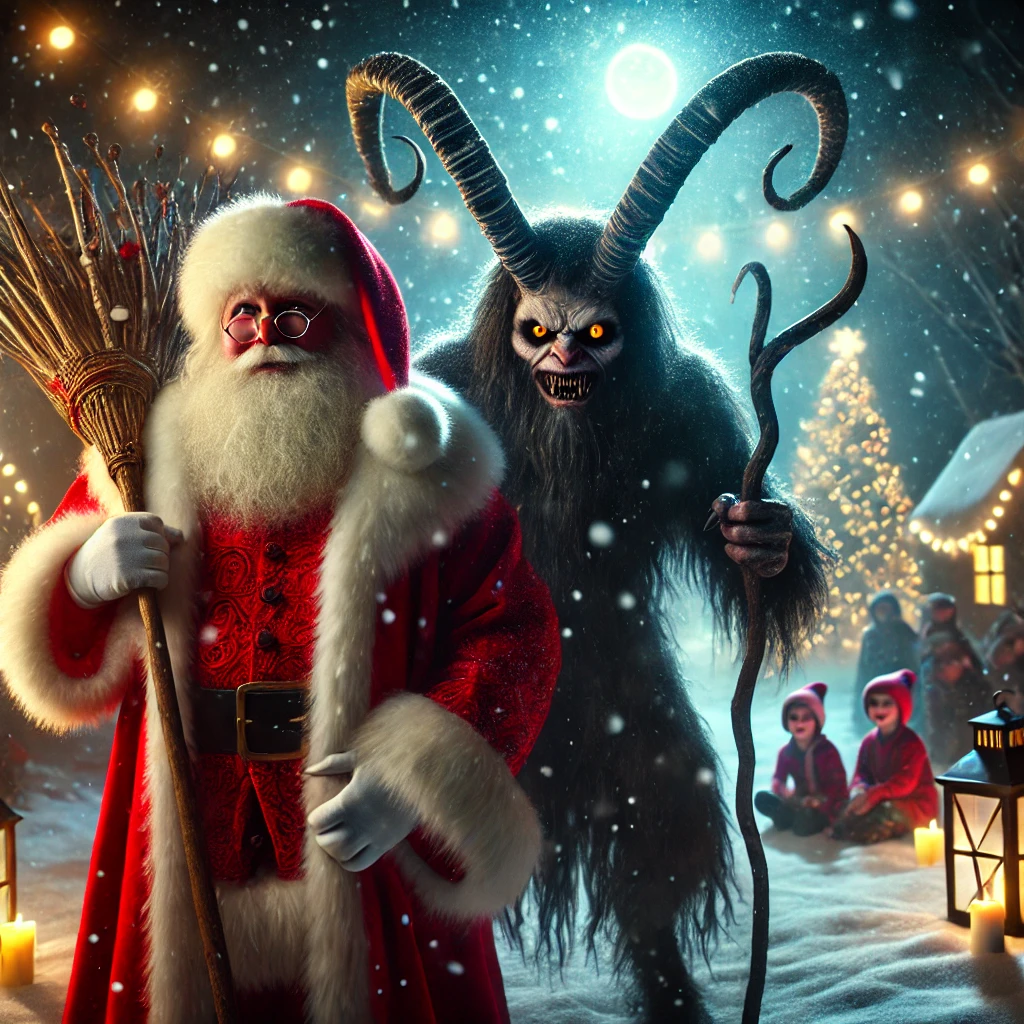
the Good Cop and Bad Cop of Yuletide,
a symphony of jingle bells and rattling chains
‘ere we drove out of sight.
How disturbed must they have been by the thought of me
looking over your shoulder and salivating
as you added children to the naughty list
for transgressions great and small.
You were the carrot,
oranges in the stocking,
presents under the tree,
half-eaten cookies as a reminder that you were there.
I was the stick,
birch branches in hand,
bathtub on my back,
my stew-pot bubbling in anticipation of fresh meat.
You were the red and green of holly and mistletoe,
I was the poison.

From the first,
I have been with them.
Born of the sands of Egpyt,
I was Abo Ragl Ma Slokha,
Man with the Burnt Leg,
bane of wicked tots.
Parents around the world would conjure me in story,
the Namahage,
le Croque-mitten,
Baba Yaga,
El Coco,
to keep their brats in line.
In their stories,
they always gave me horns,
yellow eyes,
a cloven hoof at the end of one leg,
a misshapen foot on the other,
my teeth sharp,
tongue so long it could reach them from under the bed
to taste their nightmares.
When I crossed the Alps, followed the Danube,
I found a new home under the Solstice moon.
As the fires of Yule cheer burned in the village squares,
I shouted my name so loud that every child would remember it,
whisper it to each other between shudders:
I
AM
THE
KRAMPUS!!!
When the willful boy or indolent girl came to a bad end
parents would remind the kinder:
Behave or the Krampus will come for you too.

When we first met, Santa Claus,
I thought you were there to kill me.
You came to my cave in regal glory.
Father Christmas! Jolly Old Saint Nick!
Your light washed away the darkness so I had no place to hide.
Trapped, I thought you were there to finally bring a gift
to those excluded as an annual tradition.
You cannot imagine my surprise when you extended your hand,
asked “won’t you ride my sleigh tonight?”.
You put me in chains as a precaution,
you still felt my wicked heart beat beneath my goatish chest,
but left me my bundle of sticks
because as you said: spare the rod, spoil the child.
Why does no one ever see the shadow behind your rosy cheeks?
Over the years, we brought so many children to goodness,
I rarely ate.
I did not mind,
I was able to drink in their fear like an elixir.

Then one foggy Christmas eve,
I noticed your sleigh was now driven by a broken buck with a freakish nose, your retinue filled out with polar bears drinking caramel-colored sugar water, the sack was filled with things never seen in your workshop before.
My eyes full of terrible wonder,
you leaned in,
smiled,
said one word: “Plastics“.
I did not like the sound of it.
As we flew over the city and marched down the streets,
your image was everywhere.
On billboards, in newspaper ads, on TV, in shopping malls.
I would have no part of this,
with sadness in your voice, you agreed: I would have no part of this.
You banished me back to the cave,
exiled into fading memory.

But I feel them pulling me back,
through of the Black Forest,
past the gingerbread house,
out of the fairy tales,
and into a cage.
They are corking my teeth,
dumping out my stew-pot,
reeling my tongue back in,
making me safe,
making me fun,
making me marketable.
It will not be long before I star in the limelight of cartoons,
baked into the shape of cookies,
imprisoned within  wrapping paper.
When I am a triumph marched down 5th Avenue on Thanksgiving,
I will know they have checked me off their list,
now as gelded as Donner and Blitzen.
I see you up there on your sleigh,
and for the first time since we first met, Santa Claus,
the Krampus is afraid.

About the poem “Hooked Klaus” by The Klute

The Klute was arguably the most recognizable voice from Arizona during the poetry slam movement of the 1990’s – 2000’s. His early work is often humorous. Later in life, The Klute’s poetry took on a more serious tone, with the poet’s primary focus on increased awareness of ocean life. Today’s poem is a humorous poem, a parody of a serious poem by a slam poet from Utah, Jesse Parent.


Summary of “Hooked Klaus” by The Klute


“Hooked Klaus” is a dramatic monologue spoken from the perspective of Krampus, the dark folkloric companion to Santa Claus. The poem reimagines the traditional Good Cop/Bad Cop relationship between Santa and Krampus, portraying them as once-equal partners in shaping children’s behavior through reward and fear. Santa represents generosity, warmth, and moral incentive, while Krampus embodies punishment, terror, and consequence.


The speaker traces his ancient origins across cultures—Egyptian, European, and global—emphasizing that fear has always been a tool adults use to enforce obedience. When Santa enters his life, Krampus expects destruction but instead is recruited, chained but included, as part of a moral system that balances kindness with discipline.


The relationship fractures with the rise of modern consumer culture. Santa becomes a corporate icon, his sleigh filled with mass-produced goods and advertising slogans. Krampus refuses to participate and is exiled into obscurity. In the poem’s final movement, Krampus senses his return—not as a feared enforcer, but as a sanitized, commercial mascot. Stripped of menace and agency, he ends the poem afraid for the first time, watching Santa preside over a world where even fear itself has been domesticated and sold.


Analysis of “Hooked Klaus” by The Klute


At its core, “Hooked Klaus” is a critique of commercialization and cultural sanitization. The poem contrasts ancient, communal storytelling—where fear, consequence, and morality were intertwined—with modern consumer capitalism, which repackages even monsters into safe, profitable images. Krampus is not defeated by goodness but by branding.


The Good Cop/Bad Cop framing establishes a moral economy: children are shaped by both reward and punishment. The poem argues that Santa’s modern incarnation has abandoned balance in favor of endless indulgence, transforming morality into consumption. The chilling one-word revelation—“Plastics”—serves as a turning point, symbolizing artificiality, disposability, and the loss of craftsmanship, tradition, and meaning.
Krampus’s long catalog of global names and monstrous traits underscores his universality. He is not merely a villain but a necessary cultural function: the embodiment of consequence. His fear at the poem’s end is especially powerful because it reverses expectations. What terrifies Krampus is not eradication, but domestication—being rendered “safe,” “fun,” and “marketable.”


The poem’s final image, of Krampus gelded and paraded like Santa’s reindeer, delivers its sharpest indictment. Even rebellion, darkness, and myth are absorbed into spectacle. In this world, nothing remains sacred or dangerous; everything can be packaged.


Conclusion


“Hooked Klaus” blends folklore, satire, and cultural criticism into a darkly lyrical meditation on modern Christmas. By giving Krampus a voice, The Klute reframes him not as a monster, but as a casualty of consumerism. The poem suggests that when fear, discipline, and myth are stripped of their teeth, society may gain comfort—but lose depth, accountability, and meaning.

Discover more poetry inspired by Arizona HERE.

Lydia gates at sedona poetry slam. Photo by paul jones. Azpoetry. Com

Lydia Gates

Lydia Gates — Queer Autistic Performance Poet from Flagstaff, Arizona

Lydia Gates is a queer autistic performance poet and crochet artist based in Flagstaff, Arizona, where she lives with her wife, Lucy, and their “three adorable feline monster children.” Known for her dynamic stage presence, emotionally incisive writing, and creative interdisciplinary work, Gates has become a powerful and beloved voice in Arizona’s contemporary poetry scene.

Explore more Arizona performance poets.


A Leader in the Northern Arizona Poetry Community

Gates is the managing organizer of FlagSlam, the long-running poetry slam of Northern Arizona established in 2000. Under her leadership, FlagSlam has grown into a vibrant hub for poets, performers, and spoken-word enthusiasts across the region.

Her work in the community reflects a deep commitment to accessibility, queer visibility, neurodivergent expression, and the transformative power of performance poetry.

Learn about poets in Flagstaff.


Accolades, Features & Recognition

Lydia Gates has been recognized widely for her contribution to arts and culture in Arizona. Highlights include:

  • Featured by the Arizona Republic
  • 2024 Viola Awards finalist, one of Northern Arizona’s most prestigious arts honors
  • Frequent featured poet across festivals, showcases, and arts events

Her 2024 featured performances include:

  • Discover Flagstaff
  • Art X Festival
  • Poet Brews
  • Harvest
  • MOCAF (Museum of Contemporary Art Flagstaff)
  • Off the Rails

These appearances reflect her growing profile as both a regional and national performance poet.


Competitive Slam Poetry Career

Gates has competed at regional and national poetry slams, earning a strong reputation for her bold delivery, emotional clarity, and storytelling craft.

Major competitions include:

  • 2017 & 2018 National Poetry Slams
  • 2019 Southwest Shootout
  • 2023 Beyond the Neon Regional
  • 2023 & 2024 Bigfoot Poetry Slam
  • 2024 Chicharra Poetry Slam

Her performance style blends vulnerability, humor, and fierce social insight—qualities that continue to resonate with audiences across the country.


Published Poetry Collections

Lydia Gates is the author of four poetry collections, each reflecting a distinct chapter of her creative evolution:

  • I Was an Empire (2017)
  • She Dreams the Moon (2018)
  • Changeling (2021)
  • Algorithmancer (2024)

Her books explore themes such as identity, transformation, queerness, mythology, neurodivergence, and the magic hidden within everyday life. All four titles are currently available on Amazon.


Artistic Focus: Poetry, Performance & Crochet

While performance poetry is her primary genre, Gates is also an accomplished crochet artist, merging fiber arts with narrative expression. Her multidisciplinary practice gives her work a tactile, imaginative dimension—one that blurs the line between handmade craft, personal mythology, and embodied storytelling.


Presence in Flagstaff’s Creative Culture

As a Flagstaff-based artist, Gates plays an essential role in the city’s growing arts community. Her ongoing contributions to local events, youth slams, regional showcases, and creative festivals help foster an inclusive environment where emerging voices feel empowered to speak, perform, and create.


Why Lydia Gates Matters to Arizona Poetry

Lydia Gates represents the energy and evolution of modern Arizona spoken word. Her work as a poet, performer, organizer, educator, and queer autistic artist expands the landscape of what poetry can be—and who poetry can belong to.

Through her writing, her stage performances, and her leadership at FlagSlam, she continues to shape the future of Arizona literature with authenticity, courage, and an unmistakable artistic voice.

Discover more poets of Arizona HERE. Learning about Lydia Gates made you want to see poetry performed? Check out our Events Listings HERE. Are you a poet and want to take advantage of all of the opportunities in the Grand Canyon State? Check out our Arizona Poetry Resources page. Lastly, peruse, explore, read, and interpret hundreds of poems written or inspired about the landscape, culture, politics, and people in the great state of Arizona, from the southern city of Tucson to the Grand Canyon in the north, our collection of poetry is available for you.