Yawn Arbuckle
Yawn Arbuckle

Yawn Arbuckle, an esteemed individual hailing from the enchanting landscapes of Arizona, has dedicated their entire life to the pursuit of poetic excellence. From the sun-drenched deserts to the majestic mountains, Yawn's deep connection with Arizona has shaped their artistic journey. Born and raised in the vibrant city of Phoenix, they found solace and inspiration in the breathtaking beauty of the state. Yawn's passion for poetry blossomed at a young age, as they immersed themselves in the rich literary heritage of Arizona. They delved into the works of renowned poets who found solace in the vastness of the desert and translated their experiences into mesmerizing verses. With an insatiable thirst for knowledge, Yawn embarked on an academic journey dedicated to the study of poetry. Attending the prestigious University of Arizona, Yawn honed their poetic craft under the guidance of esteemed professors and immersed themselves in the vibrant literary community of the state. They explored the depths of poetic expression, intertwining the unique essence of Arizona with their own introspective musings. Throughout their academic tenure, Yawn delved into the works of Arizona's literary giants, drawing inspiration from the evocative landscapes and diverse cultural tapestry. Their studies encompassed everything from the poignant verses of Alberto Ríos, capturing the spirit of the Southwest, to the transcendent imagery of poets who found solace in the vastness of the Grand Canyon. Yawn's dedication to their craft led them to participate in numerous poetry workshops and gatherings, where they shared their own creations and engaged in profound discussions with fellow poets. Their unwavering commitment to poetry culminated in the publication of a remarkable anthology that beautifully encapsulated the essence of Arizona's poetic soul. Now, as the esteemed admin of this website, Yawn Arbuckle continues to be a guiding light for poetry enthusiasts, fostering a community where words come alive and imaginations soar. With their vast knowledge and profound understanding of Arizona's poetic legacy, Yawn strives to inspire others to embrace the transformative power of language and embark on their own poetic odysseys. Through their tireless efforts, Yawn Arbuckle remains an unwavering advocate for the poetic arts, breathing life into the pages of this website and inviting poetry lovers from all walks of life to embark on a journey of self-expression and creative exploration.
Thanksgiving prayer poem by william s. Burroughs | azpoetry. Com

“Thanksgiving Prayer” by William S. Burroughs

thanksgiving day november 28th, 1986

thanks for the wild turkey and passenger pigeons
destined to be [  ] out through wholesome american guts
thanks for a comment to despoil and poison [Music]
thanks for indians to provide a modicum of challenge and danger
thanks for vast herds of bison to kill and skin leaving the carcasses to rot
thanks for bounties on wolves and coyotes
thanks for the american dream you vulgarize and falsify until the bear lies shine through
thanks for the kkk for [  ] killing long and feed in their notches
thanks for decent church going women with their mean ancient bitter evil faces
[Music]
thanks for killing queer for christ stickers
thanks for laboratory age
[Music]
thanks for prohibition and the war against drugs
[Music]
thanks for a country where nobody is allowed to mind his own business
thanks for a nation of things
yes thanks for all the memories all
right let’s see your arms
you always were a headache and you
always were a bore
thanks to the last and greatest betrayal
of the last and greatest
of human dreams
[Music]
you

Transcription from the video “Thanksgiving Prayer” by William S. Burroughs and Vimeo.

About the poet, William S. Burroughs

Arizona plays an unexpected yet significant role in preserving Burroughs’ legacy. The Hayden Library at Arizona State University in Tempe is home to a collection of Burroughs’ papers and manuscripts. Learn more about the William S. Burroughs Collection and his ties to Arizona HERE.

Read more poetry inspired by Arizona HERE.

William s. Burroughs | azpoetry. Com

William S. Burroughs

William S. Burroughs: Literary Icon and Cultural Provocateur

William S. Burroughs (1914–1997) was a groundbreaking writer, cultural critic, and one of the most influential figures of the Beat Generation. Best known for his novel Naked Lunch and his innovative use of the cut-up technique, Burroughs’ work explored themes of identity, addiction, control, and societal oppression. While his literary influence is global, his connection to Arizona is rooted in the preservation of his legacy.


Time in Mexico and Its Impact on His Work

In the early 1950s, Burroughs spent time living in Mexico City, a transformative period that shaped much of his later writing. It was during this time that Burroughs’ life intersected with tragedy and self-reflection, culminating in the shooting death of his wife, Joan Vollmer, in 1951—a moment he would later describe as the catalyst for his dedication to writing. Mexico’s vibrant yet tumultuous atmosphere deeply influenced works like Junky and Queer, which offer raw, unflinching portrayals of addiction and alienation.


The William S. Burroughs Archive at Arizona State University

Arizona plays an unexpected yet significant role in preserving Burroughs’ legacy. The Hayden Library at Arizona State University in Tempe is home to a collection of Burroughs’ papers and manuscripts dated 1957 through 1976. This archive provides scholars and fans with access to original drafts, correspondence, and rare documents that offer insights into Burroughs’ creative process and the development of his revolutionary ideas. The collection serves as a resource for studying the broader cultural and literary movements Burroughs helped shape, including the Beat Generation and postmodern literature.


Legacy and Influence

William S. Burroughs’ impact on literature, art, and culture remains profound. His fearless exploration of taboo subjects and avant-garde techniques continues to inspire writers, musicians, and visual artists worldwide. Though his time in Arizona was indirect, the state plays an important role in ensuring that his voice and legacy endure for future generations.

For more about William S. Burroughs and his influence, explore his works and the archival collection at Arizona State University.

Discover more poets and writers from Arizona HERE.

They don't love you like i love you poem by natalie diaz azpoetry. Com

“They Don’t Love You Like I Love You” by Natalie Diaz

they don’t love you like i love you
my mother said this to me long before
beyonce lifted the lyrics from the yeah yeah yeahs
what my mother meant by don’t stray
was that she knew all about it the way
it feels to need someone to love you
someone not your kind someone white
someone some many who live because so
many of mine have not and further live
on top of those of ours who don’t
i’ll say say say i’ll say say say what
is the united states if not a clot of
clouds if not spilled milk or blood if
not the place we once were in the
millions
america is maps
maps are ghosts
white and layers of people and places i
see through
my mother
like your mother has always known best
knew that i’d been begging for them to
lay my face against their white labs to
be held in something more than the loud
light of their projectors as they
flicker themselves sepia or blue all
over my body
all this time i thought my mother said
wait as in give them a little more time
to know your worth
when really she said wait
meaning heft preparing me for the yoke
of myself the beast of my country’s
burdens which is less worse than my
country’s plow
yes when my mother said they don’t love
you like i love you she meant natalie
that doesn’t mean you aren’t good

Transcribed from the video “Natalie Diaz: They Don’t Love You Like I Love You” by Natalie Diaz and Mellon Foundation.

About the poet Natalie Diaz

With references to songs “Hold Up” by Beyonce and “Maps” by The Yeah Yeah Yeahs, this poem takes popular music references and invites us into the privacy of the poet’s family life to share their feelings and path to healing. Learn more about Natalie Diaz HERE.

Maps by The Yeah Yeah Yeahs

Hold Up by Beyonce

A house called tomorrow poem by alberto rios | azpoetry. Com

“A House Called Tomorrow” by Alberto Rios

a house called tomorrow you are not 15
or 12 or 17 you are a hundred wild
centuries and 15 bringing with you in
every breath and in every step everyone
who has come before you all the use that
you have been the mothers of your mother
the fathers of your father if someone in
your family tree was trouble a hundred
were not the bad do not win not finally
no matter how loud they are we simply
would not be here if that were so you
are made fundamentally from the good
with this knowledge you never march
alone you are the breaking news of the
century you are the good who has come
forward through it all even if so many
days feel otherwise but think when you
as a child learned to speak it’s not
that you didn’t know words it’s that
from the centuries you knew so many and
it’s hard to choose the words that will
be your own from those centuries we
human beings bring with us the simple
solutions and songs the river bridges
and star charts and song harmonies all
in service to a simple idea that we can
make a house called tomorrow what we
bring finally into the new day every day
is ourselves and that’s all we need to
start that’s everything we require to
keep going look back
only for as long as you must then go
forward into the history you will make
be good then better write books cure
disease make us proud
make yourself proud and those who came
before you when you hear thunder hear it
as their applause

Transcribed from the video “Alberto Ríos: Dear Poet 2019” by Poets.org and Alberto Rios.

About the poet Alberto Rios

Discover the brilliance of Alberto Ríos, Arizona’s inaugural Poet Laureate and a celebrated author whose works capture the beauty of the Southwest and the complexity of human connection. Explore more about his life and poetry on HERE.

Dom flemons songwriter poet | azpoetry. Com

Dom Flemons

Dom Flemons: From Arizona Slam Poetry to Grammy-Winning Folk Musician

Dom Flemons, widely known as “The American Songster,” is a versatile poet, songwriter, and musician whose work has made a profound impact on Arizona’s creative landscape. Born and raised in Phoenix, Flemons began his artistic journey in the state’s rich artistic and cultural communities. His evolution from a prominent slam poet in Flagstaff to a Grammy-winning roots musician is a testament to his dynamic talent and dedication to storytelling through both words and music.


Early Life in Arizona and Musical Beginnings

Growing up in Phoenix, Flemons was captivated by diverse musical traditions, from folk to blues, which laid the foundation for his future as an acclaimed musician. During this time, he also began exploring poetry and storytelling as a means of creative expression. Early on, Flemons performed in coffee houses and small venues across Arizona, building a reputation for his engaging performances and passion for traditional American music.

Flemons became a prolific figure in Arizona’s creative circles, producing 25 albums featuring local singer-songwriters and poets, including six of his own projects. These early experiences helped shape his artistic vision and introduced him to the vibrant cultural traditions of the Southwest.


Slam Poetry Days in Flagstaff

Flemons attended Northern Arizona University (NAU) in Flagstaff, where he earned a degree in English. His academic focus encompassed creative writing, Latin, Greco-Roman literature, Shakespeare, and poetry, further enriching his artistic palette. During his time at NAU, Flemons immersed himself in the dynamic slam poetry scene, which was flourishing in Flagstaff.

As a slam poet, Flemons collaborated and competed with some of Arizona’s most notable poets, including Aaron Hopkins-Johnson, The Klute, Logan Phillips, John Kofonow, and Suzy Lafollette. In 2002, Flemons represented Flagstaff at the National Poetry Slam in Minneapolis as part of the city’s slam poetry team, finishing 35th out of 56 teams. His performances were known for their sharp wit, rhythm, and powerful storytelling, reflecting his ability to blend poetic expression with performance art.


Transition to Music and National Success

After making his mark in slam poetry, Flemons returned to his first love: music. His passion for preserving and performing traditional American roots music led him to co-found the Carolina Chocolate Drops, a Grammy-winning group dedicated to reviving African American string band traditions. The band’s groundbreaking album, “Genuine Negro Jig,” won a Grammy Award for Best Traditional Folk Album in 2010.

As a solo artist, Flemons has continued to celebrate and innovate within the folk music genre. His critically acclaimed album Black Cowboys (2018) was a Grammy Award nominee for Best Folk Album and earned a Blues Music Award nomination in the Acoustic Album category. The album sheds light on the often-overlooked contributions of African Americans to the history of the American West, blending music, poetry, and storytelling to create a vivid narrative.


Legacy in Arizona and Beyond

Dom Flemons’ artistic journey from the slam poetry stages of Flagstaff to international acclaim as a Grammy-winning musician highlights his unparalleled versatility and commitment to storytelling. His early years in Arizona’s poetry and performance communities played a pivotal role in shaping his creative voice, and he continues to inspire artists and audiences with his dedication to preserving America’s cultural heritage.

Flemons’ work, whether through poetry or music, reflects his deep appreciation for history, identity, and the power of words to connect people. From his time as a slam poet in Flagstaff to his groundbreaking contributions to American roots music, Dom Flemons remains a treasured figure in Arizona’s artistic legacy.


For more about Dom Flemons and his creative journey, visit his official website at The American Songster.

Discover more poets and writers from Arizona HERE.

Joy young poet | azpoetry. Com

Joy Young

Joy Young: A Dynamic Storyteller and Performance Poet

Joy Young is a versatile storyteller, performance poet, educator, and curriculum development expert whose work is dedicated to amplifying marginalized voices in the literary and performance arts. With a career spanning national stages, classrooms, and community spaces, Joy uses storytelling as a transformative tool for connection, healing, and justice.

Joy Young’s storytelling has been featured on prominent platforms like Button Poetry, Everyday Feminism, and SlamFind, showcasing their ability to captivate audiences with raw honesty and powerful narratives. They have performed at festivals, colleges, LGBTQIA+ events, and fundraising initiatives across the United States.

Known for their magnetic stage presence, Joy has opened for celebrated artists such as Andrea Gibson, Buddy Wakefield, Sonya Renee Taylor, and Denise Jolly. Formerly the co-host and co-producer of The Storyline Slam, Joy cultivated a space for storytelling at Changing Hands Bookstore in Phoenix, Arizona. Recently, they relocated to Chicago, Illinois, where they continue to engage with the local arts scene.

Educator and Facilitator

As an educator, Joy Young develops and leads poetry and storytelling workshops, storytelling circles, and various trainings designed for individuals interested in writing, performing, and teaching.

Joy’s teaching emphasizes trauma-informed practices and affirmative feedback methodologies, ensuring participants feel safe, supported, and empowered to share their stories. Their work fosters creativity, connection, and self-expression in diverse communities.

Storytelling Coaching and Consultation

In addition to performing and teaching, Joy offers storytelling coaching and consultation for individuals, organizations, and projects. Their expertise has been utilized by:

  • Non-profit organizations for policy, advocacy, and fundraising storytelling
  • Museums curating narratives into educational formats
  • Authors and creatives seeking guidance on crafting impactful stories

Joy also works with groups to shape their narratives into cohesive, compelling collections.

Justice Studies and Storytelling Research

Joy Young holds an MS in Justice Studies from Arizona State University, where their academic work focused on storytelling as a tool for empowerment and advocacy. Their capstone project, “Your Story is More than a Survival Guide,” is an open-source storytelling guide designed for individuals and groups. This guide is available for free on their website and provides actionable strategies for creating impactful stories rooted in personal experience.

National Recognition and Artistic Contributions

Joy’s performances and workshops have been featured at leading arts and storytelling events nationwide. Their dedication to using art as a tool for activism has earned them recognition in the performance poetry and education communities. Whether performing on stage, leading a workshop, or curating stories, Joy’s work highlights the profound power of storytelling in fostering empathy and change.

A Mission to Amplify Marginalized Voices

Joy Young’s work reflects their deep commitment to elevating marginalized voices, promoting equity, and fostering understanding. Through performance, education, and advocacy, they continue to create spaces where diverse stories are valued and heard.

For more information about Joy’s workshops, performances, or storytelling resources, visit their website at joyyoung.org.

Discover more poets and writers from Arizona HERE.

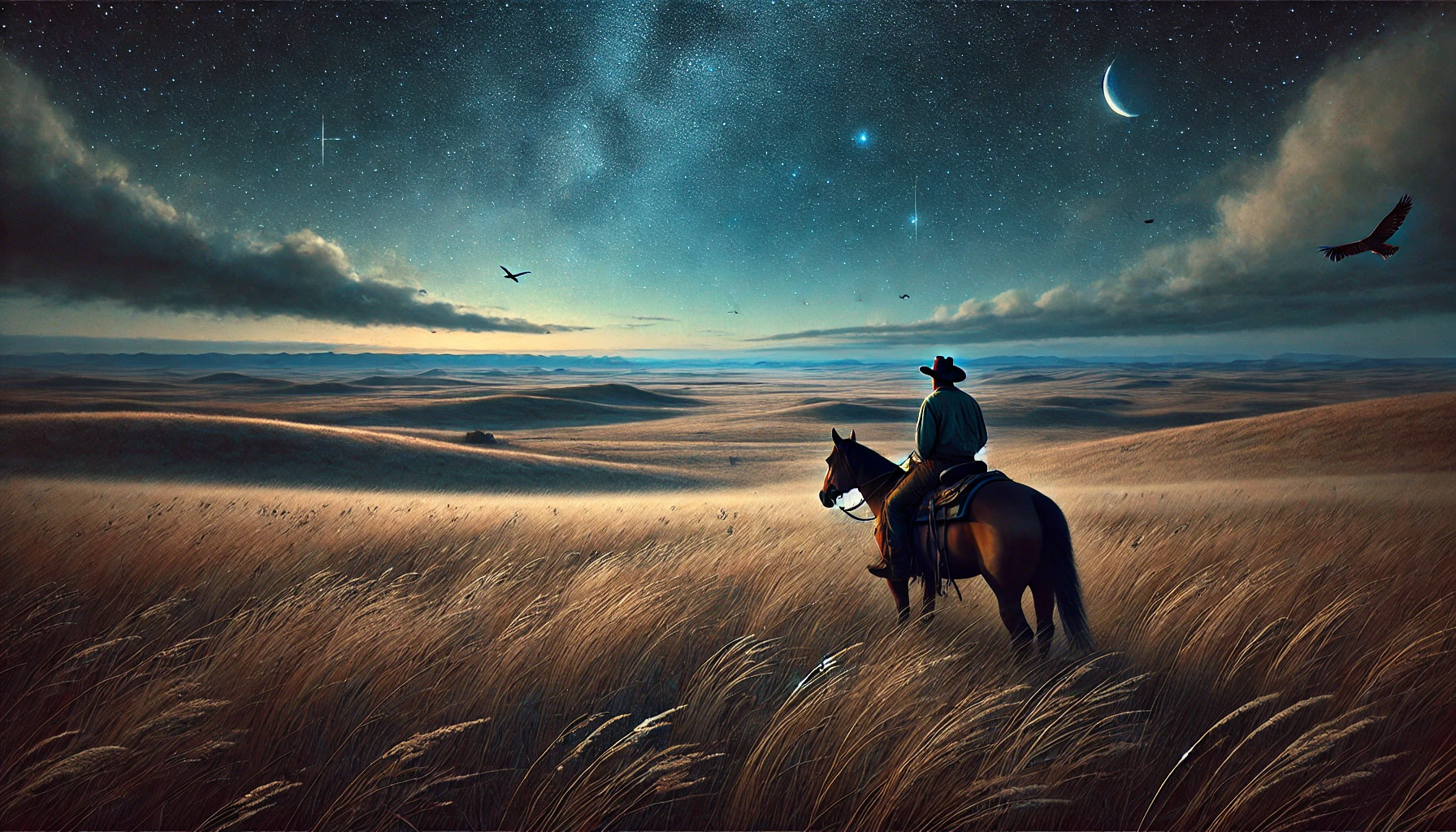
A cowboy's prayer poem by badger clark | azpoetry. Com

“A Cowboy’s Prayer” by Badger Clark

A Cowboy’s Prayer

(Written for Mother)

Oh Lord, I’ve never lived where churches grow.
I love creation better as it stood
That day You finished it so long ago
And looked upon Your work and called it good.
I know that others find You in the light
That’s sifted down through tinted window panes,
And yet I seem to feel You near tonight
In this dim, quiet starlight on the plains.

I thank You, Lord, that I am placed so well,
That You have made my freedom so complete;
That I’m no slave of whistle, clock or bell,
Nor weak-eyed prisoner of wall and street.
Just let me live my life as I’ve begun
And give me work that’s open to the sky;
Make me a pardner of the wind and sun,
And I won’t ask a life that’s soft or high.

Let me be easy on the man that’s down;
Let me be square and generous with all.
I’m careless sometimes, Lord, when I’m in town,
But never let ’em say I’m mean or small!
Make me as big and open as the plains,
As honest as the hawse between my knees,
Clean as the wind that blows behind the rains,
Free as the hawk that circles down the breeze!

Forgive me, Lord, if sometimes I forget.
You know about the reasons that are hid.
You understand the things that gall and fret;
You know me better than my mother did.
Just keep an eye on all that’s done and said
And right me, sometimes, when I turn aside,
And guide me on the long, dim, trail ahead
That stretches upward toward the Great Divide.

About the poet Badger Clark

“A Cowboy’s Prayer” was originally written and published in the 1910s by Badger Clark. The poem explores the poet’s musings on faith, career, and landscape as pillars of American life. Learn more about the poet HERE.

Badger clark

Badger Clark

Badger Clark (Charles Badger Clark Jr.) was born on January 1, 1883, in Albany, Iowa, and became one of the most iconic voices in American Western poetry. Though he is most commonly associated with South Dakota, where he served as the state’s poet laureate for many years, Clark spent a significant amount of time in the American Southwest, including Arizona, where the rugged landscapes and cowboy culture deeply influenced his work. Known for his ability to capture the spirit of the frontier, Clark’s poetry resonates with themes of freedom, nature, and the life of a cowboy, all expressed in a simple yet vivid style.

Early Life and Inspiration

Badger Clark grew up in Deadwood, South Dakota, where he was introduced to the rugged lifestyle of the West from a young age. After studying at Deadwood High School, he attended Dakota Wesleyan University but left due to poor health. In search of a better climate, Clark ventured to Arizona, where he found solace in the open skies and desert landscapes. It was here, in the remote areas of the Southwest, that Clark began writing poetry as a way to express his connection to the land and its people.

During his time in Arizona, Clark took up the cowboy lifestyle, working as a ranch hand and living in rustic cabins. These experiences profoundly shaped his poetic voice and provided him with the material that would later make him a celebrated figure in Western literature.

Literary Career

Clark’s first collection, “Sun and Saddle Leather” (1915), captured the essence of the cowboy way of life and earned him widespread acclaim. This collection includes some of his most famous poems, such as “A Cowboy’s Prayer” and “The Glory Trail”, which portray the cowboy as both a romantic and rugged figure, living harmoniously with nature and embracing the challenges of life on the frontier.

In “A Cowboy’s Prayer“, Clark uses simple language and a conversational tone to reflect the cowboy’s spiritual connection to the land. This poem, along with others, helped establish Clark as a voice for the Western lifestyle, celebrating the independence, resilience, and spirituality of those who lived close to the land. His poetry often employs humor, humility, and a reverence for nature, qualities that resonated with audiences who appreciated his authentic portrayal of Western life.

Time in Arizona and Influence

Although Clark is often associated with South Dakota, his years in Arizona were instrumental in shaping his poetic sensibilities. The beauty of the Arizona desert, the wide-open spaces, and the cowboy culture all found their way into his poetry, adding a Southwestern flavor to his work. His time in Arizona allowed him to fully experience the cowboy lifestyle, and this immersion lent a deep authenticity to his writing. The Southwest’s vast and rugged landscapes inspired his contemplative verses, which often explore themes of freedom, isolation, and a deep connection to nature.

Clark’s experiences in Arizona also introduced him to Hispanic and Native American cultures, which subtly influenced his perspective on life in the American West. His ability to portray the diverse aspects of Western life and his respect for the land and its people have made his work enduringly popular.

Later Life and Legacy

After returning to South Dakota, Clark continued to write and publish poetry, becoming one of the most celebrated Western poets of his time. In 1937, he was appointed Poet Laureate of South Dakota, a title he held until his death. Despite his relocation, Clark’s poetry remained infused with the spirit of the Southwest, capturing the essence of both the Arizona desert and the Northern plains.

Badger Clark passed away on September 26, 1957, in Hot Springs, South Dakota, but his work lives on as a testament to the Western experience. His poetry has been included in anthologies of American literature and continues to be celebrated by readers who admire his portrayal of cowboy life and his love for the Western landscape.

Legacy in Western and Cowboy Poetry

Badger Clark’s work laid the foundation for what would become the cowboy poetry tradition, inspiring future generations of poets to explore themes of independence, resilience, and nature. His poems continue to be read and appreciated by audiences around the world, and his influence is evident in the work of contemporary cowboy poets. His poems, which are often recited at cowboy poetry gatherings and Western heritage events, capture the spirit of the American West in a way that few others have.

In Arizona, Clark’s legacy is cherished as part of the state’s own rich tapestry of Western culture. His time spent in Arizona helped shape his perspective and brought a Southwestern essence to his work, ensuring that his poetry resonates deeply with the landscapes and lifestyles of both the Southwest and the Great Plains.

Today, Badger Clark is remembered not only as a poet but as a cultural icon who immortalized the cowboy spirit through his verse. His works, such as “Sun and Saddle Leather” and “Sky Lines and Wood Smoke,” continue to capture the imaginations of those drawn to the frontier and remain a beloved part of Western literary heritage.

Discover more significant poets who have been inspired by Arizona HERE.

Artwork inspired by poem here's what you do by mikel weisser | azpoetry. Com

“Here’s What You Do” by Mikel Weisser

Here’s what you do:
You take every chance to make it
Never say no to anything
If you want it
Take the minute to take that every effort
‘cause chances not only come
But they go
Here’s where you go
You go that extra mile wherever it takes you
You go where you must
Where only fools tread
You go that extra mile
Especially when no one’s watching
You take that very first chance
To admit each and every one of your mistakes
Then still dive right off that next cliff
As if there’s a water cup waiting just the way you planned
Especially when you do not believe
That that’s true
Here is what I’ll do
Look before leaping then leap anyway
Run till I drop but land when I fall
Then rise from my weeping till I glow like the sun.

About the poet Mikel Weisser

Mikel Weisser was the son of a nightclub singer, a contestant on “Who Wants to Be a Millionaire”, the founder of the So-Hi Peace Sign Themepark, a middle school history teacher, a touring poet, an accomplished guitar player and songwriter, an elected official of the Arizona State Legislature, and a marijuana activist that saw a cultural shift during his tenure. Learn more about the late, great renaissance man and poet HERE.

Elected by alice cooper azpoetry. Com

“Elected” by Alice Cooper

I’m your top prime cut of meat, I’m your choice
I wanna be elected
I’m your yankee doodle dandy in a gold Rolls Royce
I wanna be elected
Kids want a savior, don’t need a fake
I wanna be elected
We’re gonna rock to the rules that I make
I wanna be elected, elected, elected
I never lied to you, I’ve always been cool
I wanna be elected
I gotta get the vote, and I told you about school
I wanna be elected, elected, elected
Hallelujah, I wanna be elected
Everyone in the United States of America
We’re gonna win this one, take the country by storm
We’re gonna be elected
You and me together, young and strong
We’re gonna be elected, elected, elected
Respected, selected, call collected
I wanna be elected, elected

About the poet Alice Cooper

Alice Cooper is a musician and songwriter known as one of the early innovators of shock rock. Learn more about the author of the poem “Elected” HERE.

Brandon Scheuring
Brandon Scheuring | Arizona Poet, Performer & Professional Dad-Joke Enthusiast Brandon Scheuring …
Dan Seaman
Dan Seaman: The Poet of Prescott Longtime Prescott resident Dan Seaman’s poetry …